ebooks, courses and more!
Can you learn music as an adult?
Absolutely! Music is a language that can be learned and improved at any point in life. While it's true that children have greater brain plasticity and capacity to absorb new knowledge, adults and older people can also learn and improve their musical skills. In fact, studies have shown that the adult brain is capable of reorganizing and adapting to new skills and knowledge, including music. This is known as neuroplasticity.
Victor Nocelli
3/10/20265 min read
Late Development versus Early Facility: The Myth of Natural Talent
The idea that some people are born with special "gifts" for certain activities, like music or sports, is a topic of debate. While it's true that some children may show early facility for certain skills, research suggests that late development can be equally effective, if not more so.
The Problem with Natural Talent:
Having "natural talent" can be counterproductive for several reasons:
Perceived limitations: When someone is labeled as "gifted" or "talented," it can create unrealistic expectations and perceived limitations. This can lead to pressure and stress, which can negatively affect performance and motivation.
Lack of effort: When talent is believed to be innate, the importance of effort and practice can be underestimated. This can lead to a lack of dedication and perseverance, which can limit potential.
Fear of failure: When you have a special "gift," you can feel an intense fear of failure. This can lead to anxiety and paralysis, which can prevent progress and growth.
The Power of Late Development
On the other hand, late development can have several advantages:
Greater motivation: When you work hard to develop a skill, you can feel greater motivation and satisfaction.
Continuous improvement: Late development can lead to continuous improvement, as you're constantly learning and getting better.
Resilience: Late development can help develop resilience and the ability to overcome obstacles and failures.
Conclusion:
Instead of focusing on special "gifts," it's important to focus on effort, practice, and dedication. By doing so, you can develop a growth mindset and continuously improve, which can lead to greater success and satisfaction in any area of life.
The Myth of Musical Ear
All humans with healthy hearing recognize the parameters of sound (pitch, intensity, duration, timbre). Take as an example receiving a call from an unknown number and upon answering, recognizing the voice of a friend or family member -we're recognizing sound parameters!
Training the musical ear simply consists of becoming aware of these parameters, naming them and identifying their gradations. Imagine, for example, being born in a cultural environment where colors are not named: the eye perceives them, the brain recognizes and differentiates them, but not at a verbal/conscious level. The same happens with the sense of hearing. The famous "they have no ear" is a bias used to label people who perhaps only have a disconnect between what they perceive and what they consciously identify.
Recognizing Sound Parameters in Daily Life:
When we receive a call from an unknown number and, upon answering, recognize the voice of a friend or family member. At that moment, we're recognizing sound parameters such as:
Pitch: The frequency of the caller's voice.
Intensity: The volume of the caller's voice.
Duration: The length of syllables and pauses in the conversation.
Timbre: The unique quality of the caller's voice.
Musical Ear Training: A Process of Awareness and Practice
Musical ear training doesn't consist of developing a special ability, but of becoming aware of these parameters and learning to identify and name them. This can be achieved through practice and exposure to different types of music and sounds.
Benefits of Musical Ear Training:
Improved auditory perception: By training the musical ear, we can improve our ability to perceive and process sounds more precisely.
Development of musical ability: Musical ear training can help develop musical ability, whether for playing an instrument, singing, or composing music.
Increased musical appreciation: By better understanding music, we can appreciate its complexity and beauty more.
Tips for Training the Musical Ear:
Listen to music actively: Listen to music from different genres and styles, and try to identify the sound parameters.
Practice identifying notes and rhythms: Use apps or online exercises to practice identifying notes and rhythms.
Play an instrument: Playing an instrument can help develop musical ability and improve auditory perception.
In summary, musical ear training is a process of awareness and practice that can help improve auditory perception and develop musical ability. By better understanding sound parameters and practicing their identification, we can appreciate music more and improve our ability to create and enjoy it.
Benefits of Studying Music
Studying music can bring numerous benefits, both physical, emotional, and cognitive. Some benefits include:
Improved memory and concentration: Musical practice requires memorizing notes, rhythms, and melodies, which can improve memory and concentration.
Development of creativity: Music is a medium of creative expression that can help develop imagination and innovation.
Stress and anxiety reduction: Music can be an excellent way to reduce stress and anxiety, as it can help calm the mind and relax the body.
Improved coordination and motor skills: Musical practice requires coordination of hands, fingers, and feet, which can improve coordination and motor skills.
How to Improve?
Musical practice requires a great deal of concentration and dedication. When learning a new musical skill, it's common to feel overwhelmed and frustrated, especially if you don't see immediate results. However, with regular practice and perseverance, it's possible to develop new mental patterns and improve musical ability.
Adulthood can be an ideal time to learn music, as you have greater maturity and ability to understand complex concepts. Here are some strategies for musical learning in adulthood:
Building Musical Language by Relying on Already Integrated Languages:
Relate music to verbal language: Use the similarity between the grammatical structure of verbal language and music to better understand music theory. For example, the structure of a sentence can be compared to the structure of a musical phrase.
Use mathematics to understand music theory: Music has a strong mathematical foundation, so using mathematical concepts like proportion, symmetry, and sequence can help better understand music theory.
Associate music with body movements: Using body movements to express rhythms and melodies can help internalize musical language more effectively.
Other Strategies
Set clear and achievable goals: Setting specific and achievable goals can help maintain motivation and concentration.
Practice regularly: Regular practice is key to developing musical ability and improving information retention.
Listen to music actively: Actively listening to and analyzing music can help develop auditory ability and better understand musical structure and language.
The Technique Problem
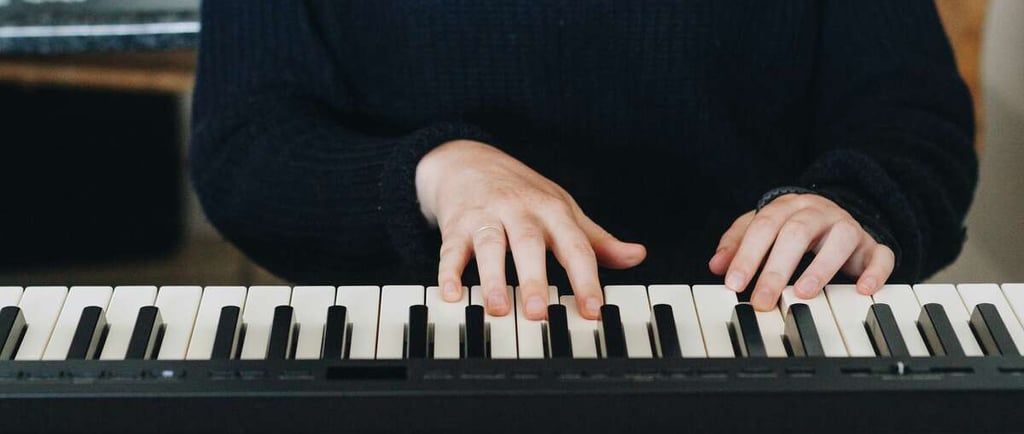
Learning to play the piano can be an exciting and rewarding challenge for adults. However, it's important to approach learning with patience and recognize your own limits to avoid frustration and burnout.
Adults may have physical limitations that affect their ability to play the piano, such as flexibility in the hands or strength in the fingers. It's important to recognize these limits and adapt practice accordingly.
Focus on Technique Regularly and Consistently:
Finger exercises: Finger exercises can help develop strength, flexibility, and coordination in the fingers.
Scales and arpeggios: Scales and arpeggios are fundamental for developing piano technique and improving the ability to play melodies and harmonies.
Practice dynamics and articulations: Practicing dynamics (forte, piano, etc.) and articulations (legato, staccato, etc.) can help develop expression and musicality.
Repertoire practice: Repertoire practice can help develop the ability to play complete musical pieces and improve piano technique in a musical context.
Additional Tips:
Find a piano teacher: A piano teacher can provide valuable guidance and feedback to help improve piano technique.
Practice with technology: Technology can be a useful tool for practicing piano, especially for adults who are just starting. There are many apps and programs that can help develop piano technique and improve musical ability.
www.piano-tree.com is the ideal app for learning piano, featuring a constantly growing library and all digital tools focused on musical development. A step-by-step guide that will help you through the process while enjoying the journey.
Enjoy the process: Learning to play the piano is a process that requires time and effort. It's important to enjoy the process and not focus only on the final result.
Piano technique in adults requires patience, recognition of one's own limits, and regular practice. By focusing on developing solid and precise technique, and by practicing effectively, adults can improve their ability to play the piano and enjoy music.
In summary, musical learning in adulthood can be an enriching and fun process if the right strategies are used. By building musical language using already integrated languages and using other effective strategies, you can improve musical ability and enjoy the additional benefits that music has to offer.